System scaffolding: the basic components
System scaffolding is a unique form of scaffold building that utilizes individual pipe components that are made to lock together. There are a few different kinds components that make up a completed system scaffold. The main parts that are used are vertical posts, horizontal bars, diagonal braces, and screwjacks. With all of these combined, you can create several different, functional scaffold configurations.
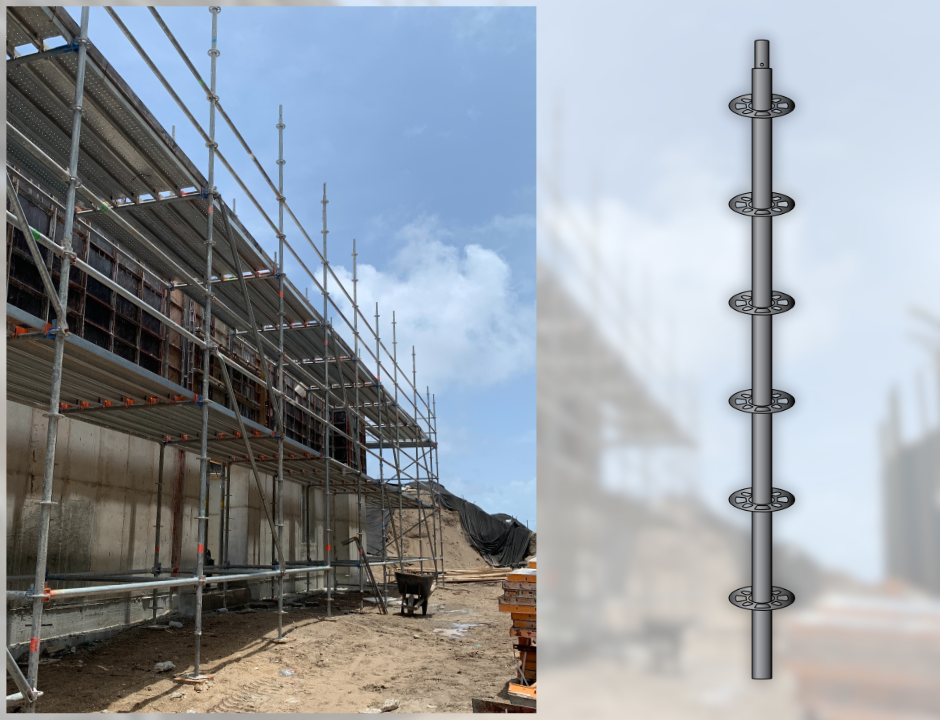
Vertical Posts
Goes by many names, standards, legs, uprights. Tall metal poles with different form of manufactured rings set at different intervals. These rings have connection points that allow the horizontal and vertical bars to attach to it. Comes in different post sizes for various projects.
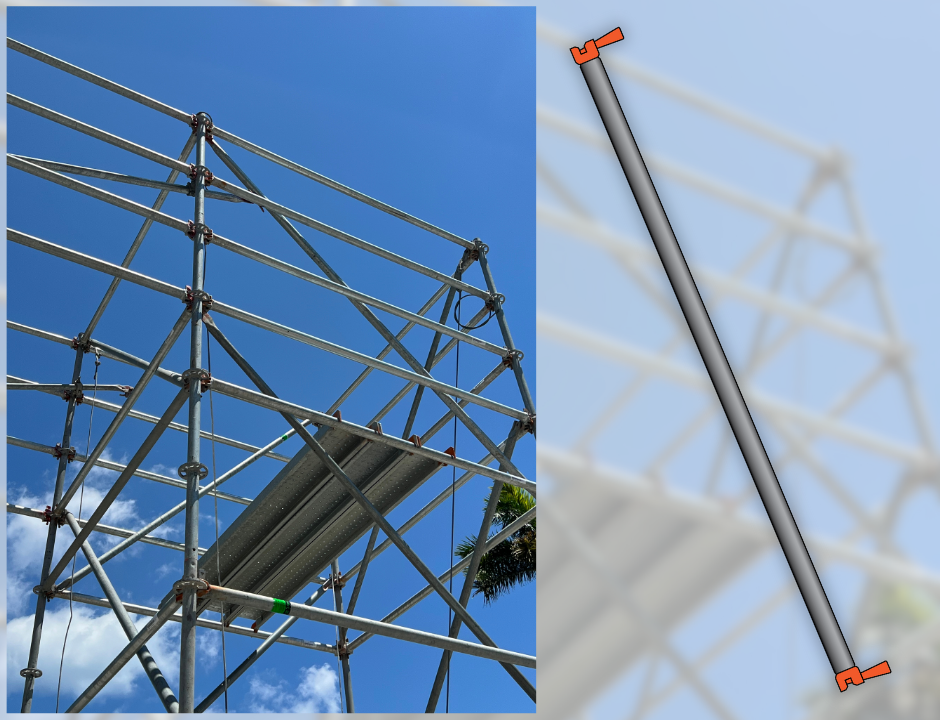
Horizontal Bars
Also known as runners or bearers. Long metal bars with connection points at both ends to attach to Vertical posts. Comes in various lengths to create different sized runs and bays.
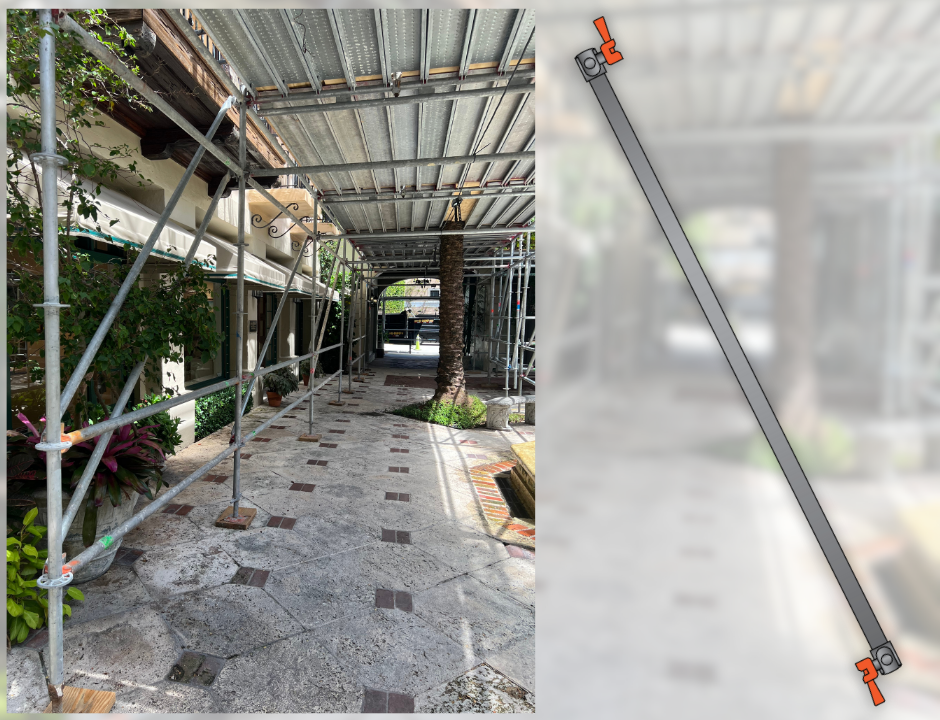
Diagonal Braces
For support of a built scaffold. Keeps posts upright and prevents the scaffold from swaying. Like horizontal bars, these have connection points at the end that connect to the vertical posts. Comes in various lengths for different bay sizes.
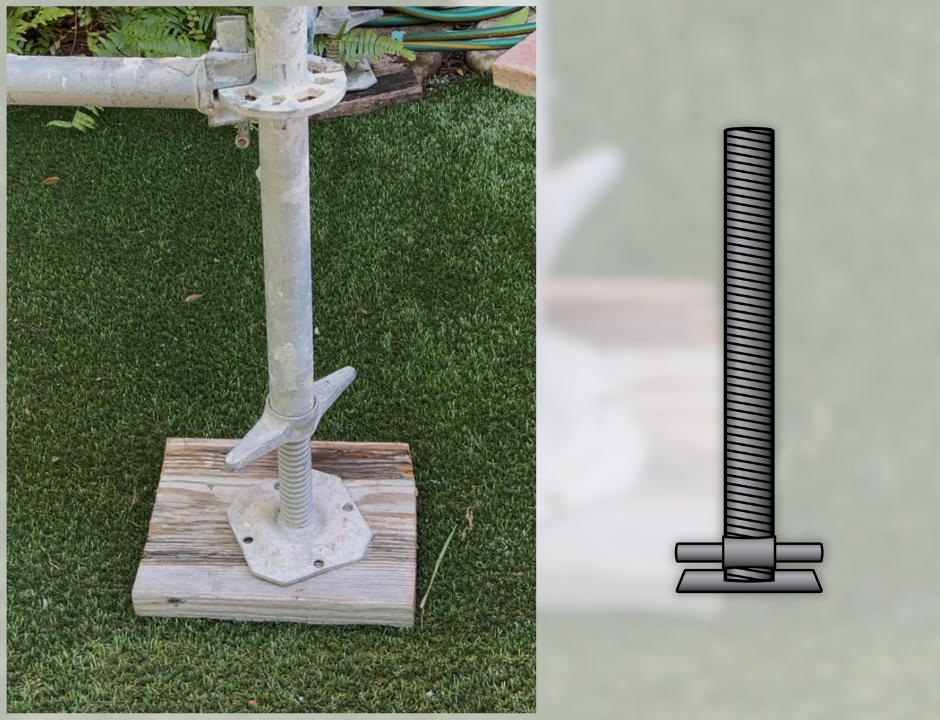
Screwjacks
Placed into the base of the Vertical posts. These have adjustable collars in order to level out the scaffolding. Every single Vertical post will have a screwjack in the base of it, each one being adjusted to make the entire scaffold the same height.
There are several other components that go along with System scaffolding like side brackets, tie-in pipes, and many more. All of these components are essential for System scaffolding to function as it’s intended to.